Birding 🐦⬛🔥
I took a field ornithology class last month, and it changed my life. I was looking for interesting summer classes to take back in April and ran into the field biology program in a huge state park with intensive but short classes. My last biology class was seven years ago, but the whole concept seemed so intriguing to me. I registered just two days later.
Building up to the class was a treat. My friends gave lots of help: subsidized waterproof boots, teaching me to disassemble my bike to fit in my puny car to bring with me, and sharing the right books to prepare me mentally for the trip.
Move-in day was pure stress --- I woke up late and rushed my packing. My itinerary got compressed with a last minute haircut followed by speeding to the highway and catching up with my UK friend on the journey up. I missed a turn because of the call, adding another twenty minutes to my ETA, and giving me more reason to speed. Just before arriving at the park, I took a left turn on a T intersection then realized that a truck in front of me had no stop. They swerved away at the last possible moment. Even in that split second finishing that turn, I saw just how close it was and from personal experience what my car would've looked like in a collision like that. There were still goosebumps on my arm when I arrived at camp.
The first day of class, we went out to the woods at 5AM to listen to the birds. The word soundscape really made sense to me then as it was a whole orchestra of species that I had to learn to be able to ignore. The other students were a lot more qualified than me either from doing birding already or having the cosmic background knowledge of biology built into their brains that was filled with equations in mine. Everyone was kind and helpful to me though. At the end of a long day depending on them to identify even a robin, I got to see dozens pelicans fly into our park --- my first field ID that I could personally claim.
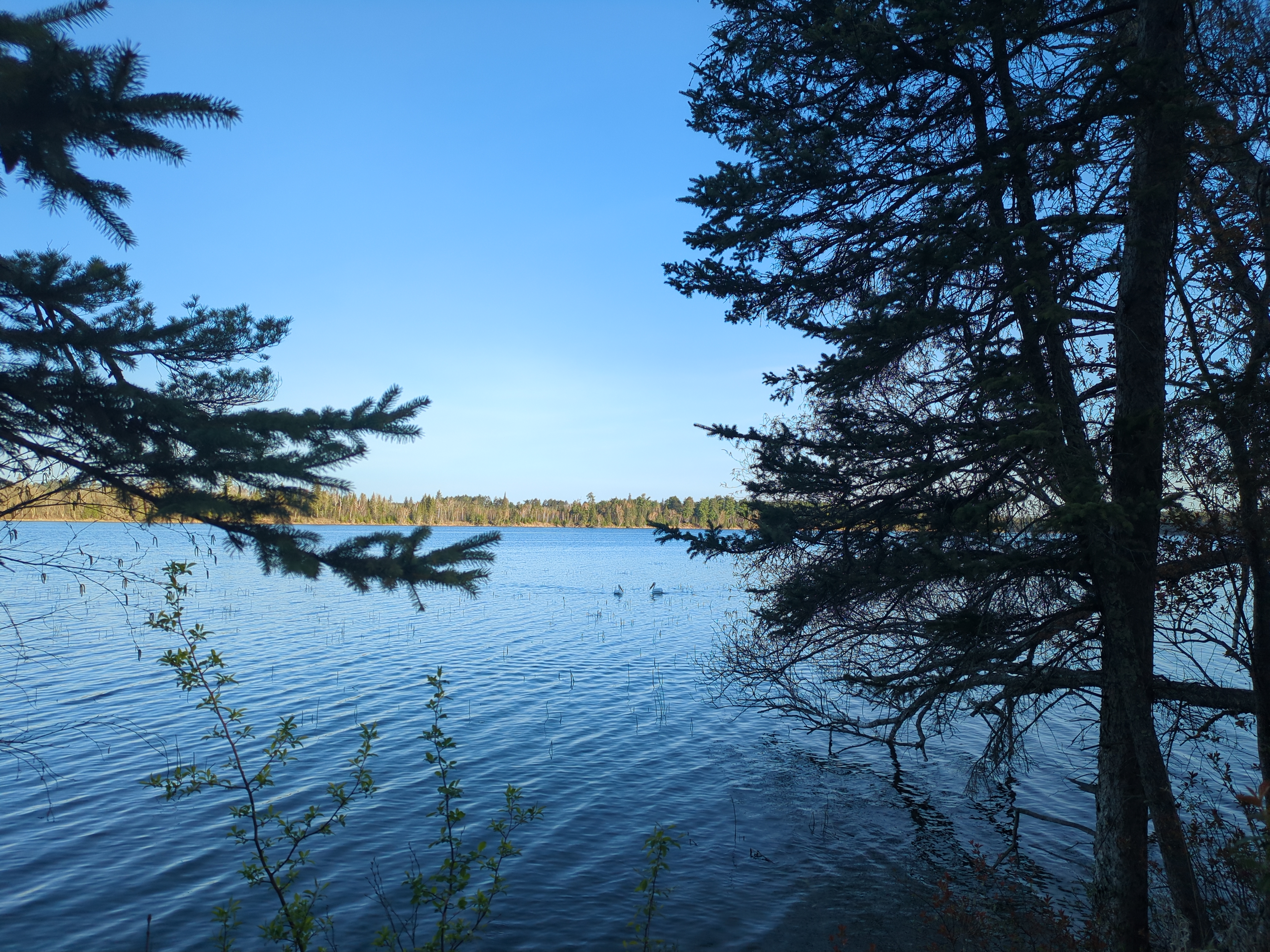
As part of our research project, we had to learn to capture and "read" birds. We did this with mist nets. My first bird I pulled out of our mist nets was a blue jay. He had thick, anthropomorphic eyebrows and was nipping at my fingers while I was pulling him out. He held onto the netting with his claws when I was pulling him out, so my professor had to teach me how to psych him out by loosening my grip enough to let him loosening his own on the netting, thinking he could fly away. This deception was enough to free him from the net then bag him.
We pull birds out of the bags soon after we capture them and measure everything about them: checking health, age, wing chord length. We hold them in banders' grips, named that because the first thing we do is assign a bird social security number onto their leg in case they're captured again by us or other banding stations along their migration route. It might seem cute to use these human terms, but birds have their very own culture that we are just now understanding.
The defining thing about birds for people --- their ability to fly --- affects everything about them. Their plumage can be bright instead of the camo found in the non-feathered creatures because they can always fly away from danger. You can see the effect of flight on the colors they wear, such as wood ducks and mallards that enjoy vibrant plumage that disappears once a year during their eclipse molt. Their colors turn drab, and they are silent because of their simultaneous molting that makes them flightless and takes away that freedom. Even their breathing becomes much shallower without their strong wing muscles to power their air sacs like our diaphragm does for our lungs. But as their flight feathers grow back, their voice, color, and oxygen return too.
They get to enjoy distinct songs that we heard outside in class. On day two when we heard our first swamp sparrow, our Quebecois professor mentioned that the first edition of our Sibley Birds East required for class had the mnemonic "chinga chinga chinga" to remember their calls, "and David Sibley from Massachusetts didn't know that was a swear in Spanish," he added in his sarcastic tone. I told the tale to a Puerto Rican gal from microbiology, and she thought it was so funny, despite me forgetting which sparrow made the call... The next day, I came into class early and saw the professor in front of the whiteboard. The board had a question saying "What's the chinga bird?" in my friend's handwriting. Just below it was "¡Tu madre! (SWSP)" with my professor still holding the marker in his hand looking so pleased with himself.
I understood the value of the class when after our last audio exam was already over, I was biking around to enjoy the day, and all I noticed were the birds along the trail with me counting competing calls. There were ovenbirds all over screaming "TEACHER TEACHER" and northern yellow warblers saying "sweet, sweet, I'm so sweet!" with a final upward inflection to distinguish them from chestnut-sided warblers. Out in the forest, I would sometimes hear a low helicopter flying overhead which was actually a ruffed grouse flapping his wings on a hollow log to mark his territory in that soundscape. I had to stop a lot as I needed to write down these roller coaster scribbles of songs I didn't recognize into my notebook. That evening, I pantomimed with my larynx to my bunkmates to try (in vain) to identify those mystery birds.
I felt stapled to my environment in a way I hadn't felt in a long time. One of the books I read during the trip was Braiding Sweetgrass which doubled the joy for me, giving me a model for naming being the first part of loving the things around you. I also read a collection of divine poems during the trip that had constant references to birds in the poets' appreciation of their gods throughout. One of my favorites even emulated their look for the structure of the stanzas:
Lord, who createdst man in wealth and store,
Though foolishly he lost the same,
Decaying more and more,
Till he became
Most poore:
With thee
O let me rise
As larks, harmoniously,
And sing this day thy victories:
Then shall the fall further the flight in me.

My tender age in sorrow did beginne
And still with sicknesses and shame.
Thou didst so punish sinne,
That I became
Most thinne.
With thee
Let me combine,
And feel thy victorie:
For, if I imp my wing on thine,
Affliction shall advance the flight in me.
'Easter Wings,' George Herbert
Being around these talented nature humans was also something that really challenged me in a useful way. My classmates debunked a bit of Wisconsin propaganda in my mind with No Mow May being a false solution to saving the bees. The entire concept of individual action was revealed as a lie with recycling being "just a psy-op," private landowners described to me in Maoist terms (sans sparrowcide), and media savviness being heavily emphasized with all my classmates already understanding the lesson that we don't post pictures of birds struggling in nets or share anything that might turn the public against ecology research.
"So how do I help with conservation myself then?"
"Look Angel, it is going to take different forms depending on where you are, but it is always going to be collective action." They recommended getting connected with local environmentalist groups wherever I was, for pulling out invasive species from forests or protesting developments by private contractors. Their study of nature provided a systemic view that revealed how to affect change in the human world too.
But it's not right to say that individuals are irrelevant either. My own professor talked about his volunteer firefighting experience, and I got to share my own story about how my house burned down at the age of four.
"How did it burn?"
"Something electrical, but at that age I thought a crow dropped a match on my house."
He laughed and asked if that's why I avoided learning about them till now. I wasn't sure about that, but exploring the woods at the park gave me constant flashbacks to my young childhood. He gave me more recent flashbacks too. He said that one of the scariest parts of volunteering was the rush to a crash site, recognizing the car in their small town and using the jaws of life to pry open the metal door despite that fear. As he was describing it, I felt that dread burned in me too, but claiming real agency in those tragedies never seemed possible, just a fantasy to escape from grief. There was real solace for me in the idea of giving others that kind of miracle.
I left camp the evening before the final breakfast --- there was a wedding in Alabama I was attending, and I needed to make my own migration very early the next morning. The whole way down on my below-the-speed-limit drive back home, I thought about how difficult life could be but how much I enjoyed the challenge all the same. In my Sufism class last year, I got to read all about how these sheikhs saw God as this teasing lover that would continually make life more difficult for the poet because they were following God, and those challenges made them love Him even more. I couldn't stop thinking about Rumi's line, "I pulled you out of one fire / to push you into another."
It was in Atlanta airport that next morning when my sister called me and gave me the news: our house burned not quite down but enough to make it uninhabitable. My family was fine though, and anything outside the kitchen and dining room was covered in ash but didn't burn up.
My sister was just a baby, but I still remember the night our first house burned down. I remember my father waking up and looking at the mirror, getting very upset, and carrying me out to the garage with my mother carrying my sister out. He put me down on the concrete, with me crying as they took out the cars out of the garage. Later, we all stood on the front lawn in the dark, seeing the flames tower over the chimney that I'd warm up by.
The next day, I woke up in a different bed and had to remember why. I went to preschool and all my classmates made cards for me. They drew me and my family standing by burning homes with stick figure firefighters putting it out. They told me some version of "sorry your house burnd." My lack of English made me miss the fact that they were trying to care for me though.
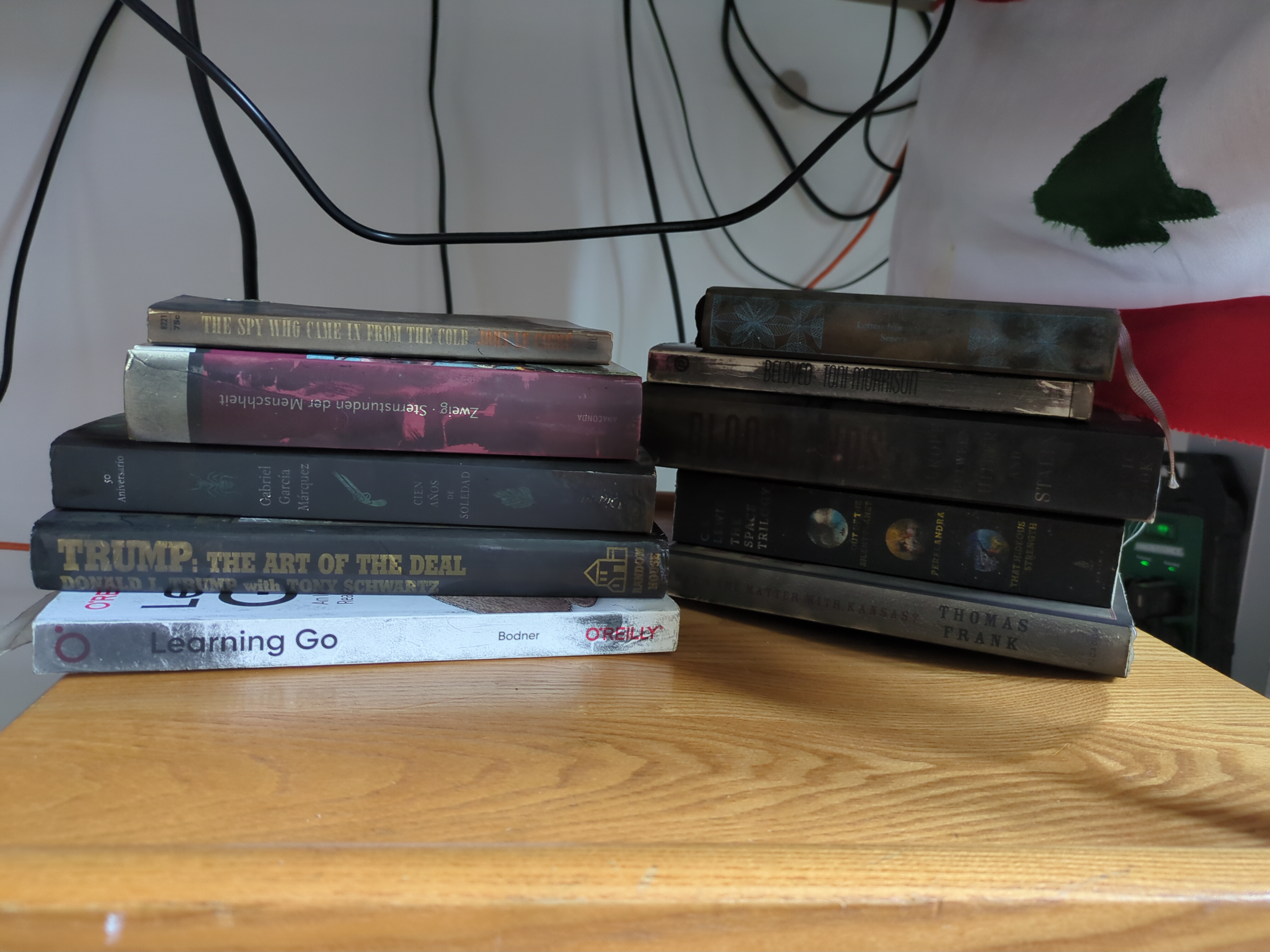
But this time I got to see a lot more of that love. My own classmate from high school was a volunteer firefighter that night, giving oxygen to my cat in front of the house we'd hang at after AP Bio. Him, some other old friends, and I went back to my home and found a lot of my books downstairs covered in ash, in their own proverbial eclipse molt. But I have the English now to see that they were fully legible on the inside, still making the world more vibrant with their words. My new textbooks also had enough corvid lore to conclude that a firebombing from their kind is unlikely.
Keeping my heart open, letting myself be tender even after so much aching has been how I've been able to keep soaring.